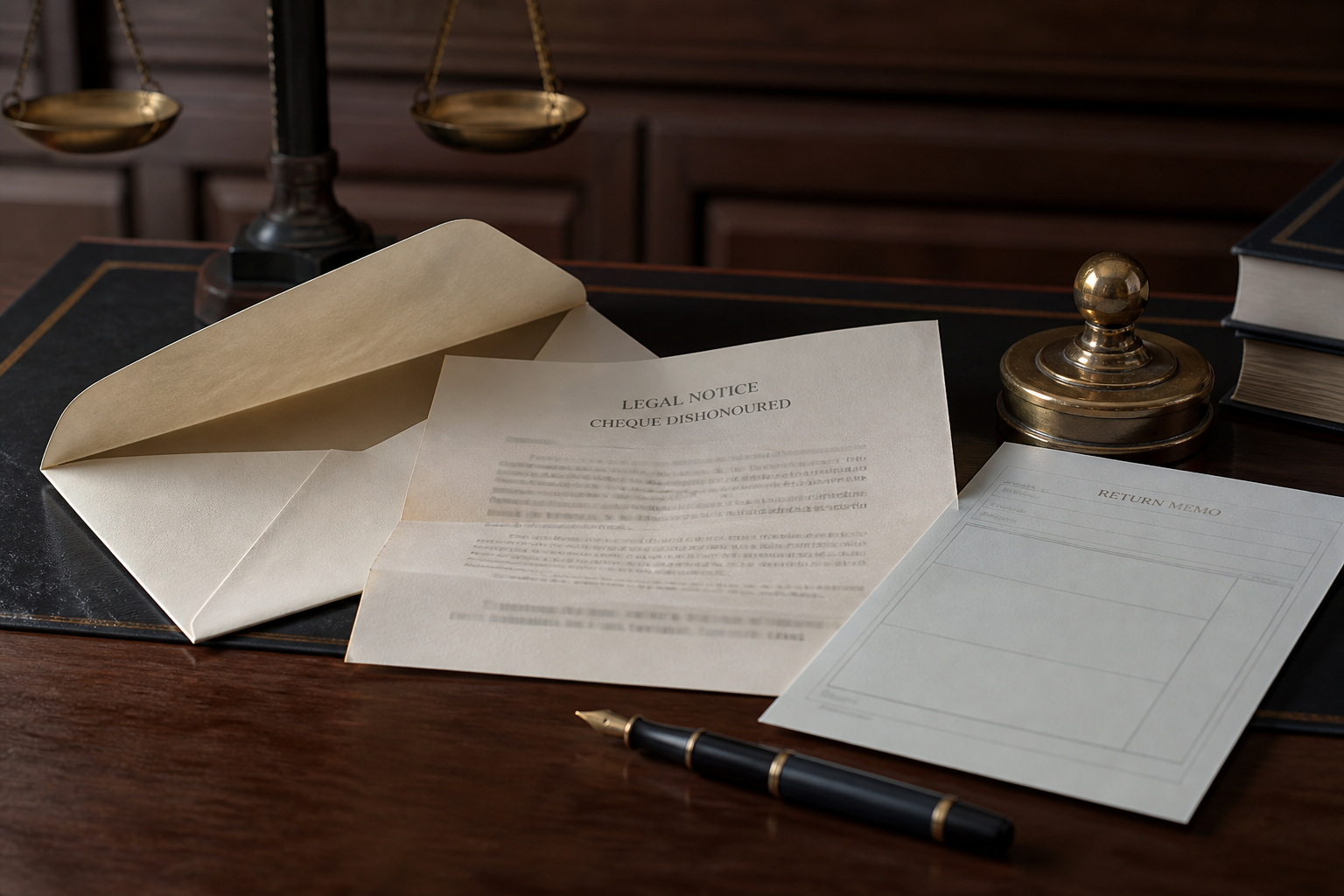
A dishonoured cheque creates a remedy under section 138 of the Negotiable Instruments Act, 1881. That remedy runs on a sequence of fixed periods, and two of them are unforgiving: miss either and the complaint is not maintainable, however good the underlying claim.
The sequence
The cheque is returned unpaid. The bank issues a return memo. Keep it. It records the date and the reason, and both matter.
A demand notice is issued. The payee must issue a written demand within thirty days of receiving information from the bank that the cheque has been returned. The notice must demand payment of the cheque amount.
The drawer has fifteen days. Time runs from receipt of the notice. If payment is made within that window, the matter ends there.
The complaint is filed. A cause of action arises only when the fifteen days expire without payment. The complaint must then be filed within one month of that date, before a Magistrate.
The two hard deadlines are the thirty days to issue the notice and the month to file after the fifteen-day period lapses. Neither is a formality.
What the notice has to do
It must identify the cheque, state that it was presented and returned unpaid, and demand the cheque amount. Notices frequently fail on service rather than content: a notice sent to an address the drawer has left, or sent by a method that leaves no record, invites a dispute about receipt that has nothing to do with the merits.
Send it to the address on record and keep proof of dispatch and, where possible, of delivery.
What the proceeding is, and is not
A section 138 proceeding is criminal in form. It is heard by a Magistrate, and the drawer faces conviction rather than a money decree. That is precisely why it is effective: it creates a consequence a civil suit does not.
But it is not a recovery mechanism in itself. A conviction may carry compensation, and interim compensation may be directed during the proceeding, but a payee who wants a decree for the debt may still need a civil suit. The two are not alternatives and one does not bar the other.
The practical questions before filing
Is the cheque within its validity period? A cheque presented after it has expired does not attract the section.
Was it returned for a reason the section covers? Insufficiency of funds is the common one, but the section reaches beyond that.
Is there a legally enforceable debt behind it? The section presumes one, but the presumption is rebuttable, and a cheque issued as security or against a disputed account will be contested on exactly that ground.
Where can it be filed? Jurisdiction ordinarily follows the branch of the payee bank where the cheque was delivered for collection.
If you are the drawer
A notice is not a judgment. Payment within the fifteen days ends it. If the cheque was issued as security, or the amount is disputed, or the cheque was altered, those are defences to be raised properly and early, with the documents that support them. Ignoring the notice removes the cheapest option and leaves only the expensive ones.
This note is general information published under the Bar Council of India's rules and is not legal advice. It should not be relied upon without taking specific advice on your own facts.